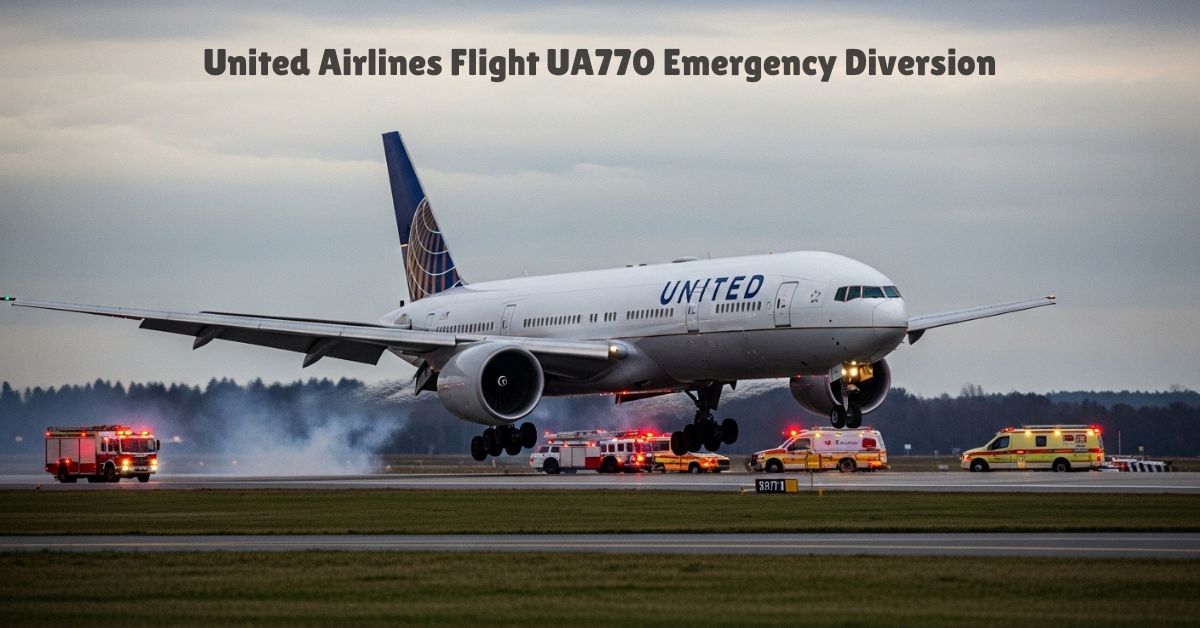

Commercial air travel is built on systems, procedures, and constant vigilance. Most flights depart, cruise, and land without incident, quietly doing what millions of passengers expect every day. Occasionally, however, a flight takes an unexpected turn that draws public attention and raises questions about aviation safety. The emergency diversion involving United Airlines Flight UA770 is one such case. While situations like this can be alarming for passengers and observers, they also reveal how layered safety protocols work in real time.
This article explores the United Airlines Flight UA770 emergency diversion in detail. It explains the sequence of events, the possible reasons behind such diversions, how airlines and pilots respond, and what passengers experience during moments like these. The goal is to provide a clear, human-centered understanding without speculation or sensationalism.
Understanding United Airlines Flight UA770
United Airlines Flight UA770 was a regularly scheduled commercial flight operated by United Airlines, one of the largest carriers in the world. Like thousands of other United flights each week, it followed standard preflight checks, crew briefings, and safety procedures before departure. At the gate, nothing appeared out of the ordinary. Passengers boarded, luggage was loaded, and the aircraft departed according to plan.
Flights like UA770 are designed with redundancy in mind. From engines and navigation systems to crew roles and communication channels, modern aircraft are prepared for unexpected situations. This built-in resilience plays a crucial role when something does not go as planned.
What Is an Emergency Diversion in Aviation?
An emergency diversion occurs when a flight changes its planned route and lands at a different airport than originally scheduled. This decision is not taken lightly. Diversions can be triggered by a wide range of factors, including technical irregularities, medical emergencies, weather concerns, or other safety-related issues.
In aviation terms, “emergency” does not always mean immediate danger. Often, it reflects a precautionary decision made to ensure the highest level of safety for everyone on board. Pilots are trained to treat even minor anomalies seriously, especially when continuing the flight could increase risk.
Early Signs That Led to the Diversion
During the flight, the cockpit crew of United Airlines Flight UA770 detected an issue that required further evaluation. These signs may have come from onboard monitoring systems, cockpit alerts, or direct observation by the flight crew. Modern aircraft continuously monitor thousands of parameters, and even a small deviation can prompt closer inspection.
Rather than attempting to troubleshoot the issue while continuing toward the destination, the pilots followed established procedures. This included communicating with air traffic control and the airline’s operations center to assess the safest course of action.
The Decision-Making Process in the Cockpit
Pilots are trained to make decisions under pressure using checklists, teamwork, and clear communication. In the case of UA770, the crew would have reviewed the relevant procedures, consulted aircraft manuals, and discussed options with dispatchers on the ground.
Factors such as remaining fuel, weather conditions, airport availability, and runway length all play a role in choosing a diversion airport. The selected airport must be able to safely accommodate the aircraft and provide necessary support services.
Once the decision was made, air traffic control was notified, and the aircraft began its diversion under priority handling.
Communication With Passengers During the Event
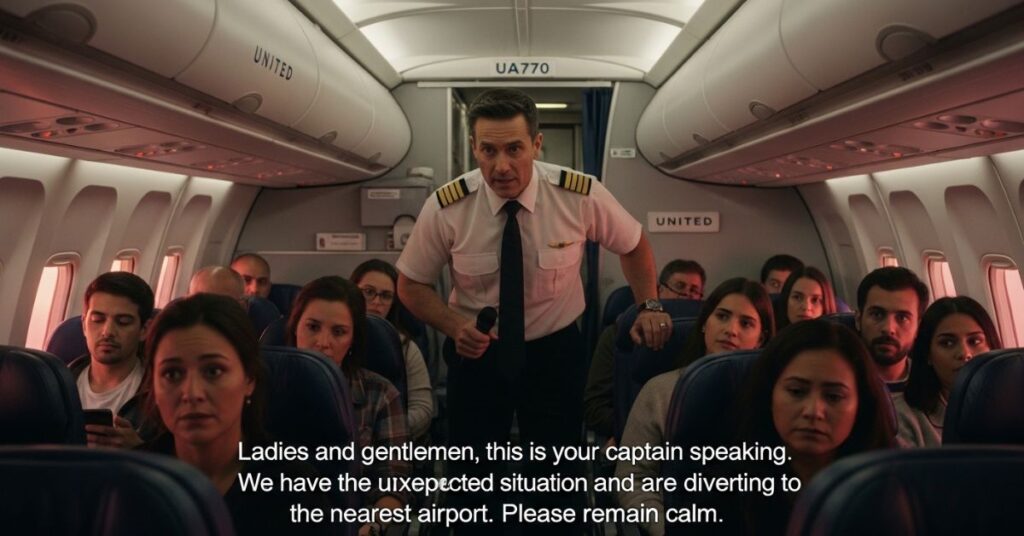
For passengers, the first sign of something unusual often comes through an announcement from the captain or flight attendants. On United Airlines Flight UA770, passengers were informed that the aircraft would be diverting due to a safety-related concern.
Airline crews are trained to balance transparency with reassurance. While technical details may not always be shared immediately, passengers are typically told enough to understand that the situation is under control and that safety is the guiding factor.
Flight attendants also play a critical role in maintaining calm inside the cabin. Their presence, professionalism, and steady communication help reduce anxiety during unexpected situations.
The Diversion and Landing
As UA770 approached the diversion airport, emergency services were placed on standby as a standard precaution. This does not necessarily indicate a severe emergency; rather, it ensures rapid assistance if needed after landing.
The aircraft landed safely, and passengers were brought to a stop without incident. From an operational perspective, a safe landing following an emergency diversion is considered a successful outcome.
Once on the ground, the situation transitioned from an in-flight concern to a ground-based operational response.
What Happens After an Emergency Landing?
After landing, the aircraft was met by maintenance teams and airline representatives. Engineers inspected the plane to identify and address the issue that prompted the diversion. Depending on the findings, the aircraft may be cleared for further flights or temporarily removed from service for repairs.
Passengers were typically asked to remain seated until clearance was given. In some cases, they may disembark directly at the gate, while in others, buses are used to transport them to the terminal.
United Airlines, like other major carriers, has established procedures for passenger care following disruptions. This can include rebooking on alternate flights, providing meals or accommodations, and offering updates as more information becomes available.
Passenger Experience and Emotional Impact
Even when handled smoothly, an emergency diversion can be stressful for passengers. Fear, confusion, and frustration are common reactions, especially for those unfamiliar with aviation procedures.
For some travelers, the event may reinforce trust in airline safety systems, seeing firsthand how issues are addressed promptly. For others, it may highlight how little control passengers have once onboard, which can be unsettling.
Airlines increasingly recognize the importance of post-event communication, both at the airport and afterward, to help passengers understand what happened and why certain decisions were made.
Why Emergency Diversions Are a Sign of Safety, Not Failure
It is natural to associate emergency diversions with danger, but in reality, they often reflect the strength of modern aviation safety culture. Pilots are encouraged to act conservatively, even if it causes delays or inconvenience.
In decades past, some issues might have been handled differently. Today, the emphasis is firmly on prevention and risk management. If something does not feel right, landing as soon as practical is the preferred option.
The UA770 emergency diversion fits squarely within this philosophy. The system worked as intended, prioritizing safety over schedule.
The Role of Technology in Preventing Escalation
Modern aircraft are equipped with advanced diagnostic systems that can detect problems long before they become critical. These systems alert pilots to irregularities, allowing them to take action early.
In addition, constant communication between the aircraft and ground operations provides pilots with expert support during decision-making. This networked approach reduces uncertainty and improves outcomes during unexpected events.
The diversion of United Airlines Flight UA770 likely benefited from these technological safeguards, helping ensure a controlled and safe conclusion.
Media Coverage and Public Perception
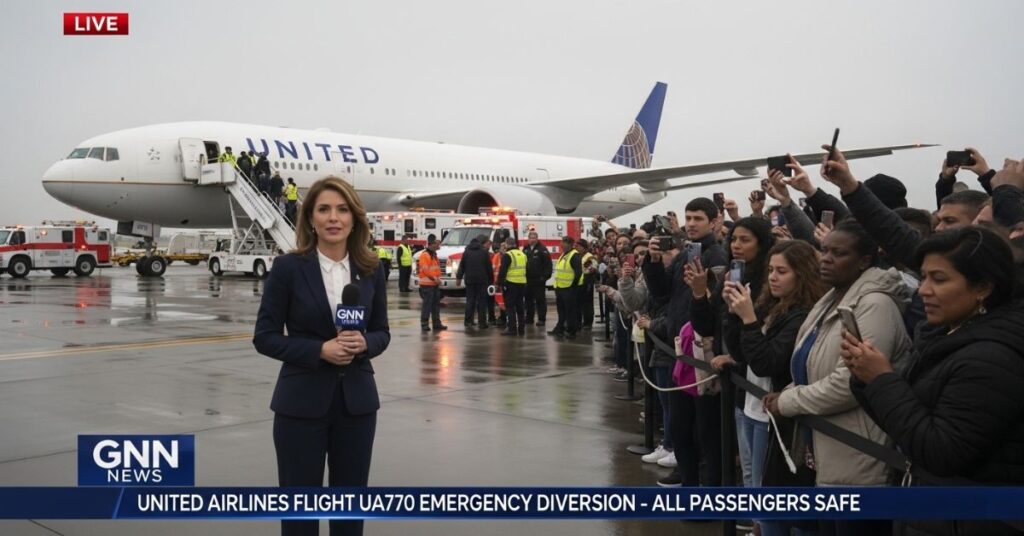
When emergency diversions make headlines, public perception can sometimes skew toward alarm. Headlines may focus on the word “emergency” without explaining the context or outcome.
In reality, the vast majority of such incidents end without injuries or damage. Clear reporting and accurate information are essential to avoid unnecessary fear and misunderstanding.
Understanding what actually happens during events like the UA770 diversion helps travelers make informed judgments about air travel safety.
Lessons for Travelers
While passengers have no control over technical or operational decisions, there are lessons to be taken from events like this. Paying attention to safety briefings, remaining calm during unexpected announcements, and following crew instructions all contribute to a safer experience.
It is also helpful for travelers to understand that delays or diversions are rarely arbitrary. They are the result of careful assessment by trained professionals who have safety as their primary concern.
United Airlines’ Safety Culture
United Airlines operates under strict regulatory oversight and internal safety standards. Like all major carriers, it invests heavily in training, maintenance, and operational oversight.
Incidents such as the UA770 emergency diversion are reviewed internally to identify lessons and improvements. This continuous feedback loop helps enhance safety across the entire operation.
Rather than being isolated events, diversions contribute to a broader culture of learning and risk reduction.
The Bigger Picture of Aviation Safety
Commercial aviation remains one of the safest modes of transportation in the world. Events like emergency diversions may seem dramatic, but they are relatively rare when viewed against the millions of flights operated each year.
Each safe landing following an unexpected issue reinforces the effectiveness of modern aviation systems. The UA770 incident serves as a reminder that safety is not about avoiding problems altogether, but about managing them effectively when they arise.
Conclusion
The United Airlines Flight UA770 emergency diversion demonstrates how complex systems, human judgment, and clear procedures come together to protect lives. While the experience may have been unsettling for those on board, the outcome reflects the strength of modern aviation safety practices.
By understanding what happened and why, passengers and observers alike can gain confidence in the processes that govern air travel. Emergency diversions are not signs of failure, but evidence that safety is taken seriously at every level.
Frequently Asked Questions
What caused United Airlines Flight UA770 to divert?
The diversion was triggered by a safety-related concern identified during the flight, prompting the crew to land at an alternate airport as a precaution.
Was anyone injured during the UA770 emergency diversion?
No injuries were reported. The aircraft landed safely, and passengers were assisted on the ground.
Are emergency diversions common in commercial aviation?
They are relatively rare compared to the total number of flights, but they do occur as part of standard safety practices.
Does an emergency diversion mean the aircraft was in danger?
Not necessarily. Many diversions are precautionary and occur before a situation becomes serious.
How do airlines help passengers after a diversion?
Airlines typically assist with rebooking, provide updates, and may offer meals or accommodations depending on the situation.
Should passengers be worried about flying after incidents like this?
Events like the UA770 diversion show that safety systems work as intended. Commercial aviation remains highly safe overall.